
Get Your AC Ready for Summer in Dubai: A 2026 Checklist
Prepare your air conditioner for the intense 2026 Dubai summer. Our homeowner checklist covers filters, coils, and warning signs to prevent breakdowns and save.
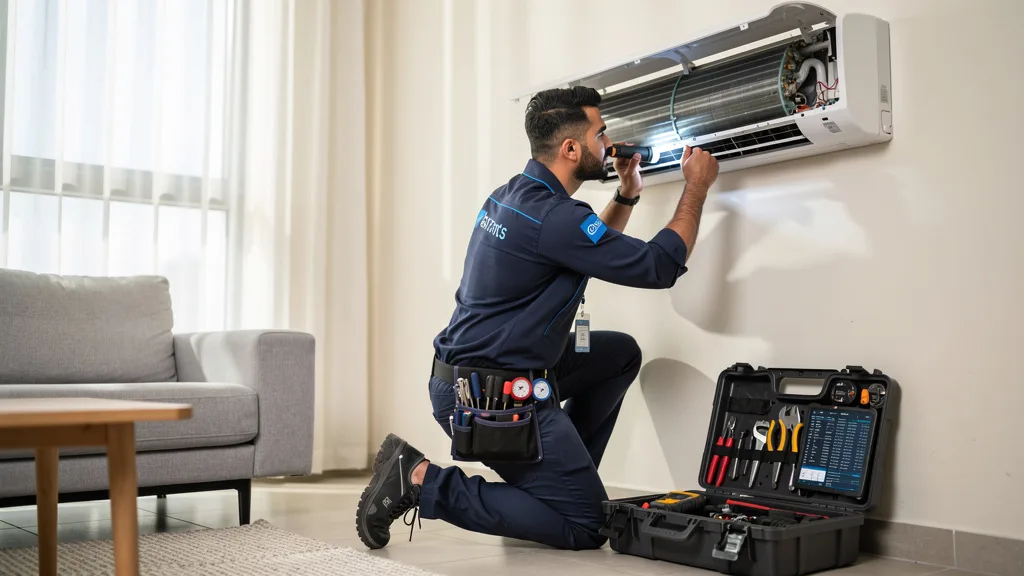
Is your air conditioner truly prepared to handle the relentless heat of a Dubai summer? Proactively servicing your unit is the single most important step to ensure a cool, comfortable home and avoid costly emergency repairs during peak season. This guide provides a comprehensive homeowner checklist and professional insights to guarantee your system runs efficiently all summer long.
Preparing your AC for the summer in Dubai involves a series of essential checks and maintenance tasks. These include cleaning or replacing air filters, inspecting and clearing outdoor condenser coils, ensuring the condensate drain line is unblocked, testing the thermostat, and examining refrigerant line insulation. Following these steps helps prevent system failure, improves cooling efficiency, and can significantly lower your energy bills during the hottest months of 2026.
Why AC Maintenance Is Critical Before the Dubai Summer
In Dubai, an air conditioning system isn't a luxury; it's an essential service for health and comfort. As temperatures soar, your AC unit is placed under immense strain, running almost continuously to combat the extreme summer heat. Without regular maintenance, this constant operation can lead to sudden breakdowns, leaving you without cooling when you need it most. Deferred maintenance and the intense peak load often collide, causing system failure right in the middle of July or August.
Preventative care is also a matter of financial prudence. A well-maintained AC unit operates more efficiently, consuming less electricity and reducing your monthly DEWA bills. Simple issues like dirty filters or clogged coils can force the system to work much harder, increasing energy consumption by up to 15%. Furthermore, addressing minor problems early on prevents them from escalating into major component failures, which are significantly more expensive to fix. Understanding the potential AC maintenance cost in Dubai can help you budget for this crucial service and avoid the surprise of emergency pricing.
Finally, regular maintenance directly impacts your home's air quality. Over time, dust, debris, and even mold can accumulate within the AC system, particularly in the filters and ducts. When the unit is running, these contaminants are circulated throughout your home, potentially aggravating allergies and respiratory issues. A thorough cleaning ensures that the air you breathe is not only cool but also clean and healthy for your family.
Your Essential AC Summer Preparation Homeowner Checklist
Before the full force of the Dubai summer arrives, running through a basic maintenance checklist can make a significant difference in your AC's performance and longevity. These are tasks that many homeowners can perform themselves to keep their system in good working order. Completing these simple checks helps ensure your unit is ready for the high demand of the coming months and can alert you to potential problems that may require a professional's attention.
"For Dubai residents, thinking of your AC unit like a car is helpful. You wouldn't drive it for a year without an oil change or check-up. Your AC works just as hard, if not harder, during the summer. A little preventative care in May can save you from a major headache in July. Our guide on how to get your AC ready for summer in Dubai is your first line of defense." - Lead Technician, PropertyMaintenanceUAE.com
Clean or Replace Your Air Filters
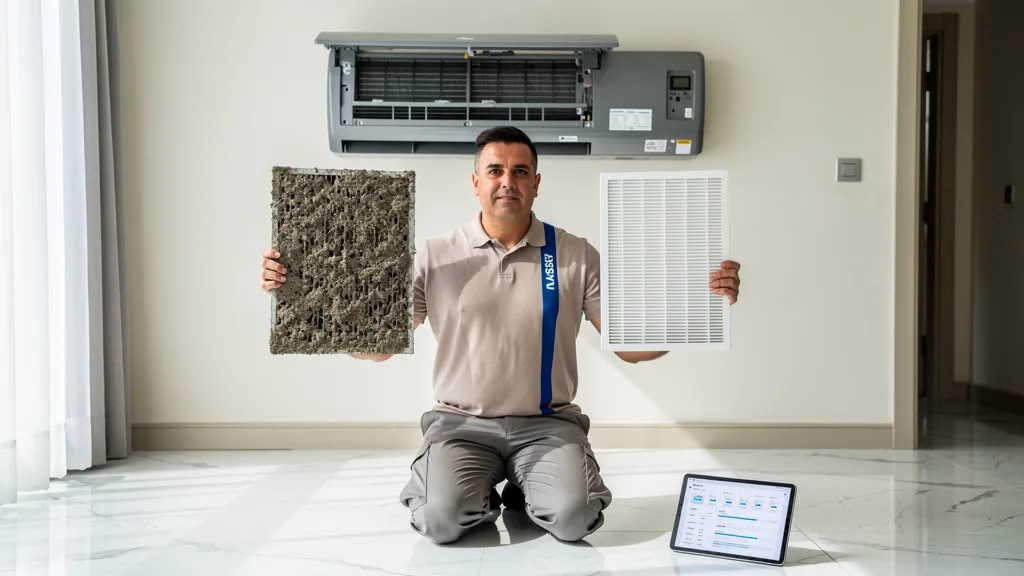
The single most important maintenance task you can perform is cleaning or replacing your air filters. A clogged, dirty filter restricts airflow, forcing your AC's fan motor to work harder and reducing the system's cooling efficiency. This not only increases your energy consumption but can also lead to the evaporator coil freezing over, which can cause serious damage. Most manufacturers recommend checking your filters monthly, especially during periods of heavy use like the Dubai summer.
To perform this task, locate the filter compartment on your indoor unit. It's typically behind a grille on the wall or ceiling. Slide the filter out and inspect it. If you have a disposable filter, replace it with a new one of the same size and type. If you have a reusable filter, you can clean it by gently washing it with water and a mild detergent. Make sure the filter is completely dry before reinstalling it to prevent mold and mildew growth. This simple step can dramatically improve your system's performance and the air quality in your home.
Inspect and Clear Outdoor Condenser Coils
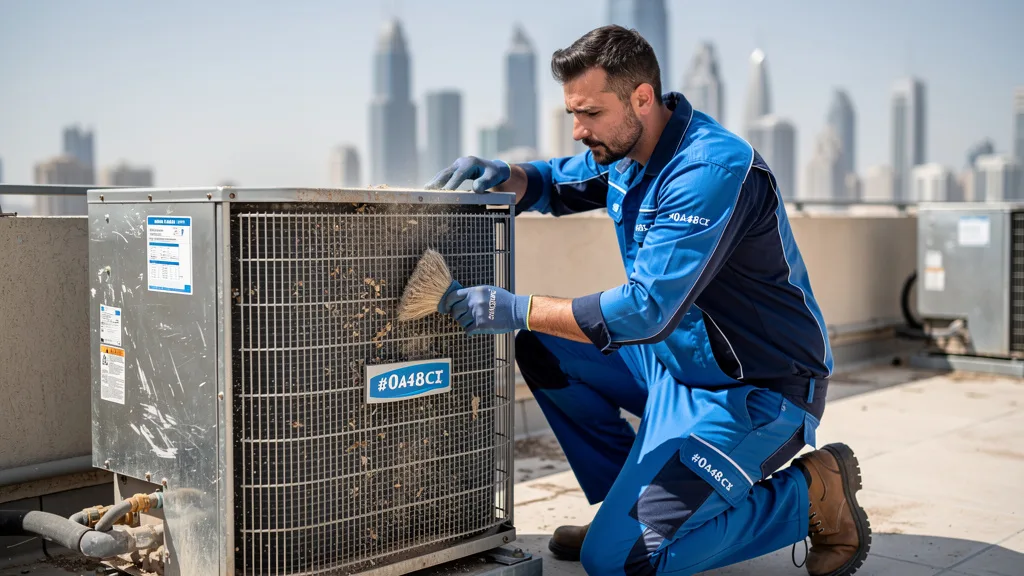
Your AC system's outdoor unit, the condenser, plays a critical role in releasing heat from your home. The condenser coils are lined with delicate aluminum fins that can easily become blocked by dust, sand, leaves, and other airborne debris common in Dubai. When these coils are dirty, heat transfer is impeded, forcing the compressor to work longer and harder. This reduces cooling capacity and efficiency, driving up your energy costs.
Before you begin, ensure the power to the outdoor unit is turned off at the circuit breaker for safety. Visually inspect the coils and use a soft brush or a garden hose on a gentle setting to remove any visible debris. Be careful not to bend the delicate fins. For more stubborn grime, a specialized coil cleaning foam, available at hardware stores, can be used. Maintaining at least two feet of clear space around the entire unit is also crucial for proper airflow.
Check and Unclog the Condensate Drain Line
As your AC cools the air, it also removes humidity. This moisture collects and is channeled away through a condensate drain line. Over time, this line can become clogged with algae, mold, and sludge, causing water to back up. A clogged drain line can lead to water damage in your walls and ceilings, promote mold growth, and may even trigger an automatic shutoff switch, disabling your AC entirely. This is one of the most common reasons for emergency AC service calls in Dubai.
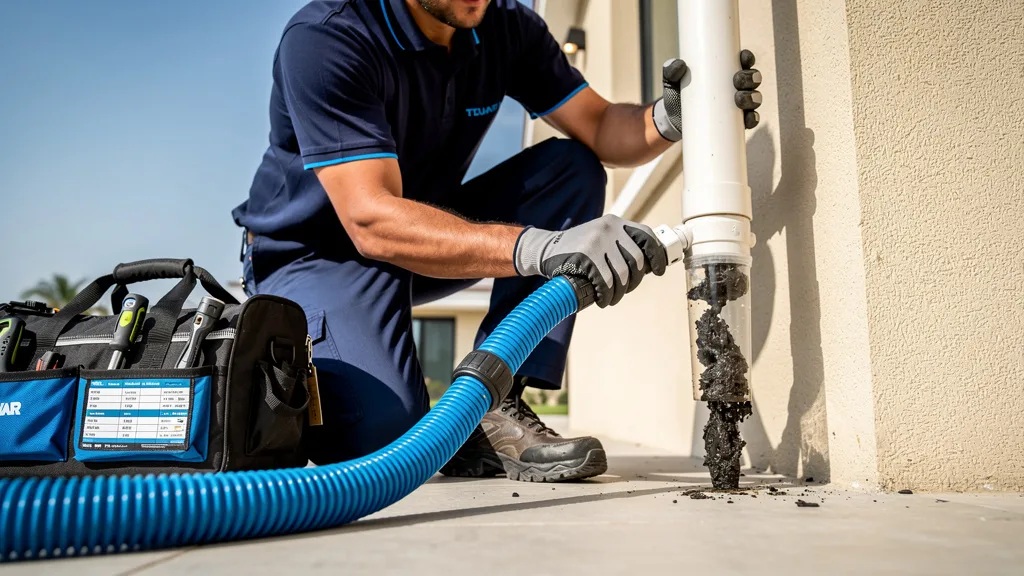
You can often clear minor clogs yourself. Locate the drain line's termination point, which is usually a PVC pipe on an exterior wall of your home. You can try using a wet/dry vacuum to suck out the blockage from this end. For more persistent clogs, a professional technician will use specialized tools to flush the line completely, ensuring water can flow freely and preventing a system shutdown during a heatwave.
Test Your Thermostat for Accuracy
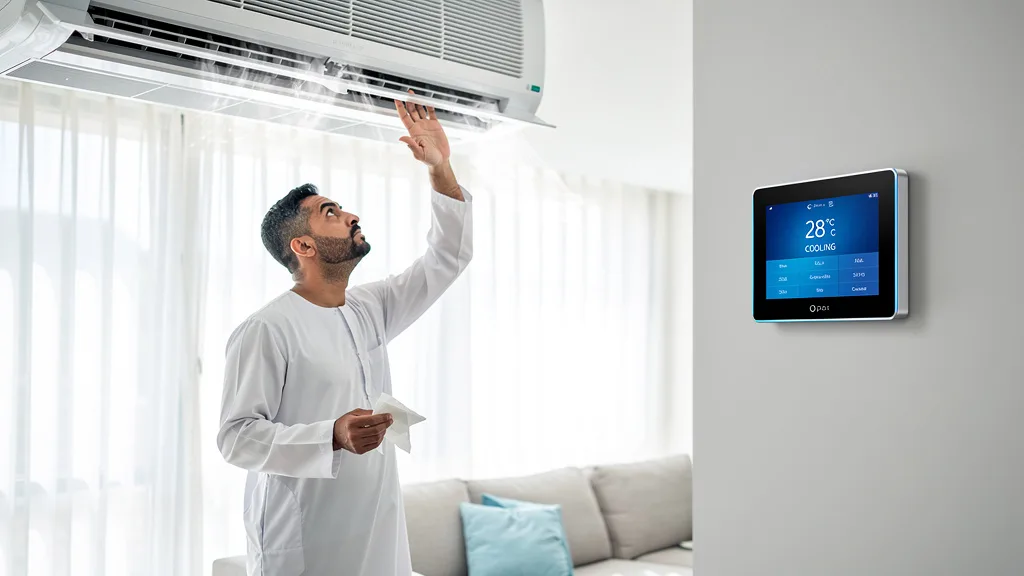
The thermostat is the brain of your air conditioning system, telling it when to turn on and off to maintain your desired temperature. If your thermostat is not calibrated correctly, it can lead to inefficient operation, discomfort, and wasted energy. An inaccurate thermostat might cause the AC to run longer than necessary or not kick in when the room gets too warm. It's a simple component that has a major impact on both comfort and cost.
A simple way to test its accuracy is to place a reliable glass thermometer next to the thermostat. After about 15 minutes, compare the readings. If there is a discrepancy of more than a degree or two, your thermostat may need recalibration or replacement. Also, check that the settings are appropriate for summer: set it to 'Cool' and 'Auto'. If you have an older, manual thermostat, consider upgrading to a programmable or smart thermostat, which can automate temperature settings for significant energy savings.
Examine Insulation on Refrigerant Lines
Your AC system has two copper lines that run between the indoor and outdoor units, carrying refrigerant. These lines are covered with foam insulation to prevent energy loss and condensation. The larger of the two lines, the suction line, should be cool to the touch and covered in this insulation. Over time, sun exposure and harsh weather can cause this insulation to crack, deteriorate, or fall off.
When the insulation is damaged, the refrigerant gains heat as it travels to the indoor unit, reducing the system's cooling efficiency. It also can cause the line to sweat excessively, leading to dripping water. Inspect the insulation along the entire accessible length of the refrigerant lines. If you see any gaps, cracks, or missing sections, it should be replaced. This is a simple fix that a professional can handle quickly during a routine maintenance visit. preventative care.
Warning Signs: When to Call for Professional AC Service
While DIY checks are beneficial, some issues demand the expertise of a certified technician. Ignoring these warning signs can lead to catastrophic system failure and more expensive repairs. Knowing when to stop troubleshooting and call for professional AC service is crucial for any homeowner in Dubai. The following table summarizes key symptoms and the recommended course of action.
| Warning Sign | Potential Cause | Recommended Action |
|---|---|---|
| Weak Airflow or Warm Air | Clogged filter, low refrigerant, failing fan motor, duct leak | Check filter first; if unchanged, call a professional immediately. |
| Unusual Noises (Grinding, Squealing) | Worn bearings, failing compressor, loose parts | Turn off the system to prevent further damage and call for service. |
| Foul Odors (Musty, Burning) | Mold in drain pan/ducts, electrical issue, overheating motor | Musty smell warrants a cleaning; a burning smell requires an emergency shutdown and call. |
| Constant Cycling | Low refrigerant, faulty thermostat, oversized/undersized unit | Verify thermostat settings; if problem persists, schedule a service call. |
| Visible Leaks or Ice | Clogged drain line, low refrigerant, blocked airflow | Turn off AC to let ice melt. Call a technician to fix the underlying cause. |
Weak Airflow or Warm Air From Vents
If you notice that the air coming from your vents feels weak or isn't as cold as it used to be, it's a clear red flag. This is one of the most common symptoms that your AC is failing. The problem could be as simple as a severely clogged air filter, which you can check and replace yourself. However, it often points to more serious issues that require a professional diagnosis.
A lack of cool air could be caused by low refrigerant levels due to a leak, a failing compressor, or issues with the ductwork. Continuing to run the AC in this condition can cause the compressor to overheat and fail completely, which is one of the most expensive components to replace. If changing the filter doesn't restore cool, strong airflow, it's time to call a technician.
Unusual Noises or Foul Odors
Your air conditioner should operate with a relatively consistent, low-level hum. If you start hearing new and unusual noises like grinding, squealing, rattling, or banging, it's a sign that something is wrong mechanically. Grinding or squealing noises often indicate worn-out motor bearings, while rattling could mean loose parts. These noises will not go away on their own and will only get worse, leading to more extensive damage.
Similarly, foul odors are a cause for concern. A musty or moldy smell suggests the growth of mold or mildew inside your unit or ductwork, which compromises your indoor air quality. A burning smell is even more serious, as it could indicate an electrical fault or an overheating motor. If you smell something burning, turn off the system at the breaker immediately and call for emergency service.
Constant Cycling or System Shutoffs
An AC system should run in predictable cycles, turning on to cool the space and then shutting off once the thermostat's set temperature is reached. If you notice your unit is turning on and off every few minutes (a behavior known as short cycling) or if it runs constantly without ever cooling the room, there's an underlying problem. This erratic behavior puts excessive wear and tear on the compressor and fan motors.
Short cycling can be caused by several issues, including a refrigerant leak, a malfunctioning thermostat, or an improperly sized unit for your space. An AC that runs constantly might be severely low on refrigerant or have a major airflow problem. In either case, this inefficient operation will drive up your electricity bill and shorten the lifespan of your system. A professional can diagnose the root cause and restore proper function. For a proactive approach, an annual maintenance contract (AMC) can help catch these issues early.
Visible Leaks, Moisture, or Ice Buildup
Water pooling around your indoor AC unit is never a good sign. It's most often caused by a clogged condensate drain line, which is causing water to back up and overflow from the drain pan. While this might seem like a simple plumbing issue, it can cause significant water damage to your floors, walls, and ceilings if not addressed promptly. It can also create a hazardous slipping risk.
Another alarming sign is the formation of ice on the refrigerant lines or the evaporator coil inside the unit. This is usually a symptom of an airflow problem (like a dirty filter) or low refrigerant levels. Allowing the system to run while iced over can severely damage the compressor. If you see water leaks or ice, turn off your AC system to allow it to thaw and call a technician to fix the underlying issue before turning it back on.
Key Takeaways
Ensuring your AC is ready for the Dubai summer is a non-negotiable part of homeownership in the region. Proactive maintenance not only guarantees your comfort but also saves you money and protects your investment. Here are the essential points to remember from this guide:
- Routine Checks are Vital: Regularly cleaning or replacing your air filters is the most effective DIY task you can perform to maintain efficiency and air quality.
- Outdoor Unit Matters: Keep the outdoor condenser coils clean and ensure the area around the unit is free from obstruction to allow for proper heat dissipation.
- Watch for Water: A clogged condensate drain line can cause significant water damage and system shutdowns. Ensure it remains clear.
- Don't Ignore Warning Signs: Weak airflow, strange noises, foul odors, or constant cycling are clear indicators that you need to call a professional technician.
- Professional Service is Key: While DIY checks help, an annual professional servicing is essential to check refrigerant levels, electrical components, and overall system health. More details can be found in these 6 Steps to Prepare Your AC.
Frequently Asked Questions
Where can I get emergency AC repair in Dubai?
For urgent AC issues in Dubai, you need a reliable company with certified technicians and a fast response time. We offer emergency AC repair services across all major Dubai communities. Our teams are equipped to handle sudden breakdowns, refrigerant leaks, electrical faults, and more, with transparent pricing starting from AED 180 and a 30-day labor warranty to give you peace of mind.
When your AC fails during the summer, time is of the essence. Our booking system is designed for quick dispatch, ensuring a technician can get to your home or office promptly to diagnose and resolve the problem. Whether it's a villa in The Springs or an apartment in Dubai Marina, our goal is to restore your cooling as quickly and efficiently as possible.
Which air conditioner brand is best for Dubai's climate?
Several air conditioner brands perform exceptionally well in Dubai's demanding climate. Brands like Daikin, O General, Carrier, and Trane are widely recognized for their durability, efficiency, and ability to handle high ambient temperatures. These manufacturers offer models specifically designed for Gulf conditions, often featuring corrosion-resistant coatings and powerful compressors.
Ultimately, the 'best' brand often depends on your specific needs, the size of your space, and your budget. More important than the brand itself is ensuring the unit is correctly sized for your home and installed by qualified professionals. Proper installation and regular maintenance will have a greater impact on performance and lifespan than the brand name alone.
How often should I have my AC professionally serviced in Dubai?
Due to the extreme heat and dusty conditions in Dubai, it is highly recommended to have your air conditioning system professionally serviced at least twice a year. The most crucial service should be done in the spring (April/May) to prepare the unit for the summer peak load. A second check-up in the autumn (October/November) is also advisable to clean the system after its heavy use and prepare it for the milder winter months, as detailed in guides for Preparing Your AC for Dubai's winter.
These bi-annual services allow technicians to perform a deep cleaning, check refrigerant levels, test electrical connections, and identify any worn parts before they fail. For more detailed guidance, you can explore our analysis on how often you should service your AC in Dubai, which breaks down the benefits of this schedule.
What is the ideal AC temperature to set during a Dubai summer?
The most commonly recommended AC temperature for balancing comfort and energy efficiency during a Dubai summer is between 23°C and 25°C. Setting your thermostat within this range keeps your home comfortably cool without forcing the system to work excessively hard, which can drastically increase your DEWA bill. Each degree you lower the temperature can increase energy consumption by 6-8%.
It's also important to avoid drastic temperature changes. Setting the thermostat to a very low temperature like 18°C will not cool the room down any faster but will cause the system to run continuously, wasting energy. Using a programmable thermostat to maintain a steady, moderate temperature is the most effective strategy for both comfort and savings.
Can I perform all AC maintenance tasks myself?
While homeowners can and should perform basic maintenance tasks like cleaning/changing filters and clearing debris from the outdoor unit, most other jobs should be left to certified professionals. Tasks involving electrical components, handling refrigerant, or deep cleaning internal parts carry risks of personal injury and potential damage to the unit if done incorrectly.
A professional technician has the training, specialized tools, and diagnostic equipment to safely and effectively service your AC. They can accurately check refrigerant pressures, test capacitors and compressors, and clean parts like the evaporator coil and blower motor that are not easily accessible. A hybrid approach of regular DIY checks and bi-annual professional servicing is the best way to ensure your system's health.
Conclusion
Following this 2026 guide to get your AC ready for summer in Dubai is your best strategy for a cool and worry-free season. By combining simple homeowner checks with timely professional servicing, you protect your system from the strain of extreme heat, improve your home's air quality, and manage your energy costs effectively. Don't wait for a breakdown to happen; proactive care is the key to reliable cooling.
If you've completed the checklist and still suspect an issue, or if you'd rather leave it to the experts, our certified technicians are ready to help. We offer comprehensive AC maintenance and repair services with upfront pricing and a 30-day warranty. Ensure your peace of mind before the heat arrives. Book a Service Now.
Need certified on-demand property maintenance in Dubai?
Sub-4 hour response SLA • 30-day labor warranty • Upfront pricing from AED 180.